AI & SaaS
AI SaaS operating model
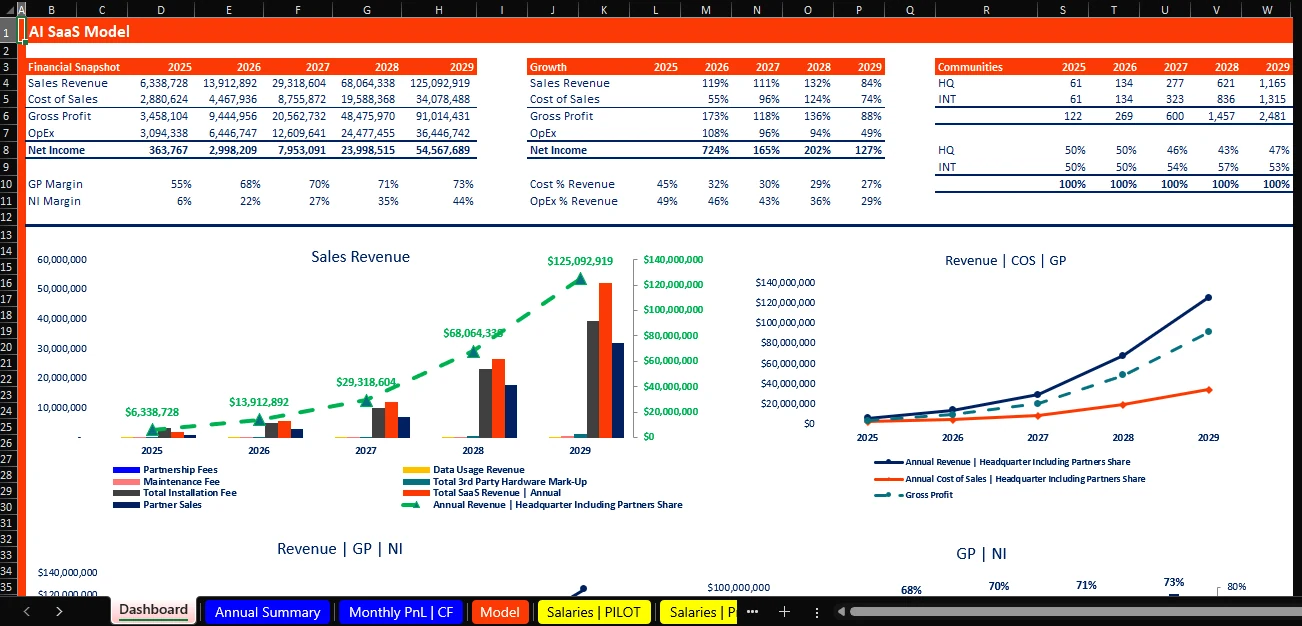
5-year revenue, cost, gross profit, operating expense and community growth dashboard for an AI SaaS business.
Explore related page →The following portfolio samples showcase selected workbook structures across SaaS, AI pricing, dashboards, costing, healthcare and real estate. Identifying client records have been excluded.
These examples illustrate financial model architecture, reporting detail and presentation style. Every assignment is scoped to its objectives.
5-year revenue, cost, gross profit, operating expense and community growth dashboard for an AI SaaS business.
Explore related page →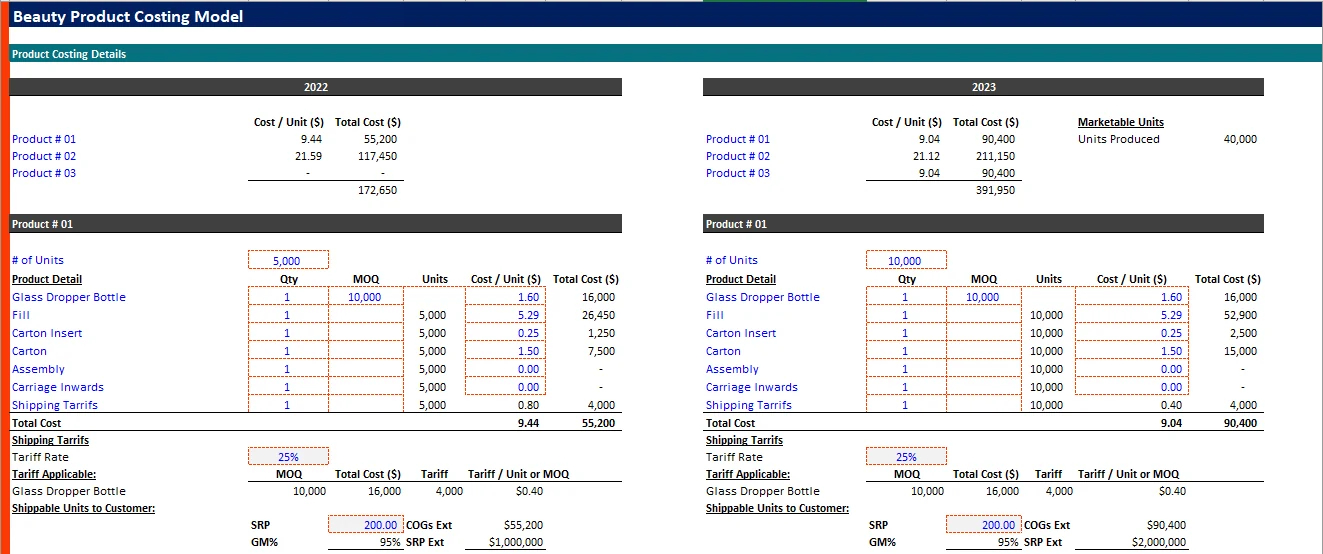
Detailed component-level costing, MOQs, tariffs and gross-margin build-up.
Explore related page →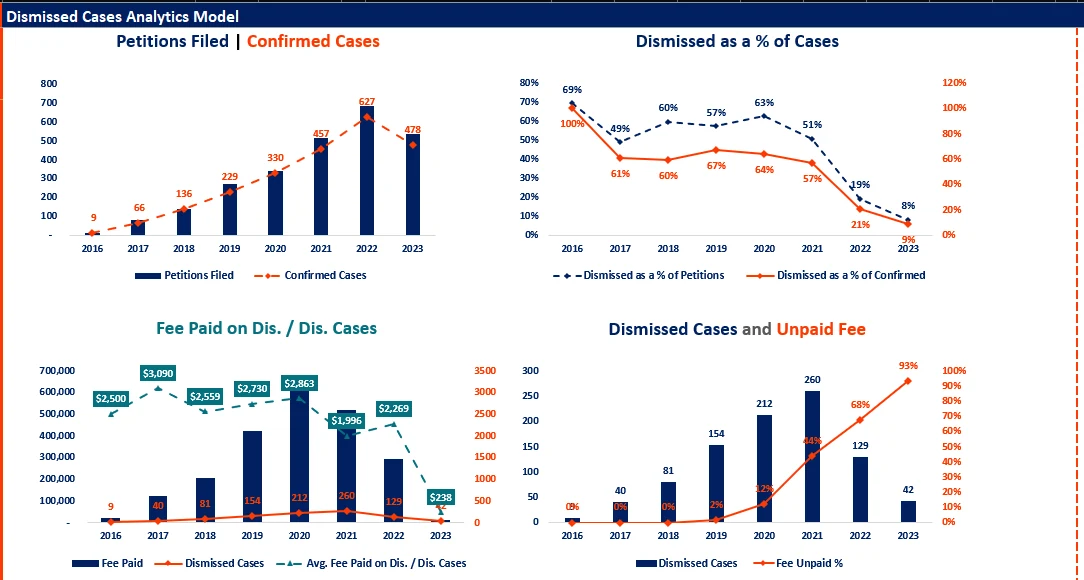
Trend, fee and case-status analytics transformed into a management dashboard.
Explore related page →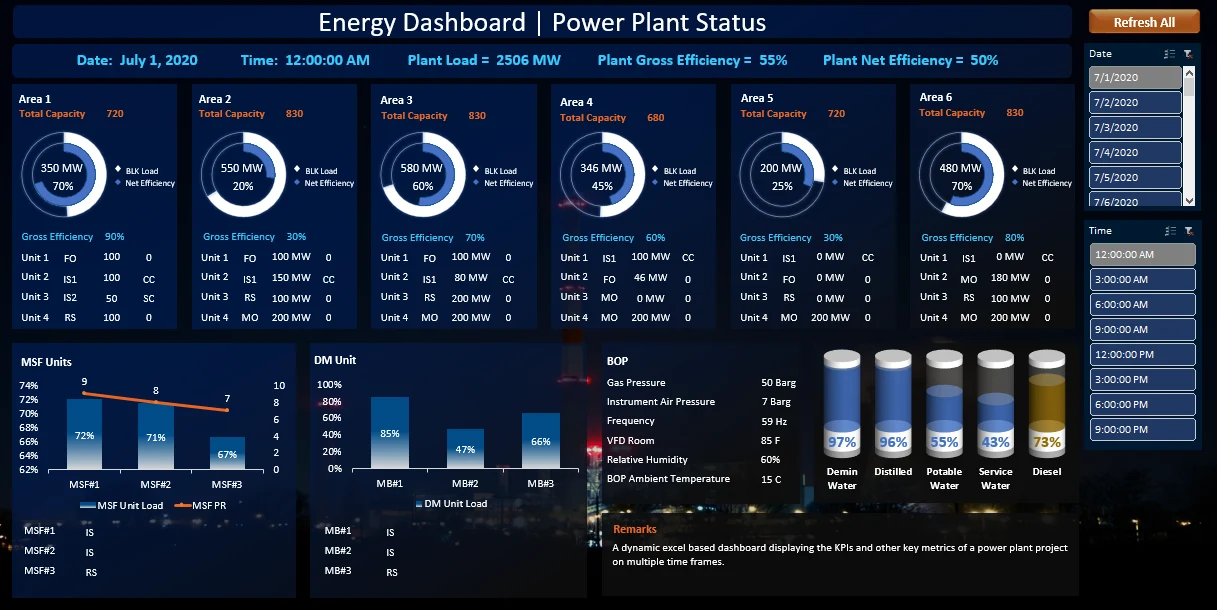
Operational KPI dashboard showing plant load, efficiency and unit status.
Explore related page →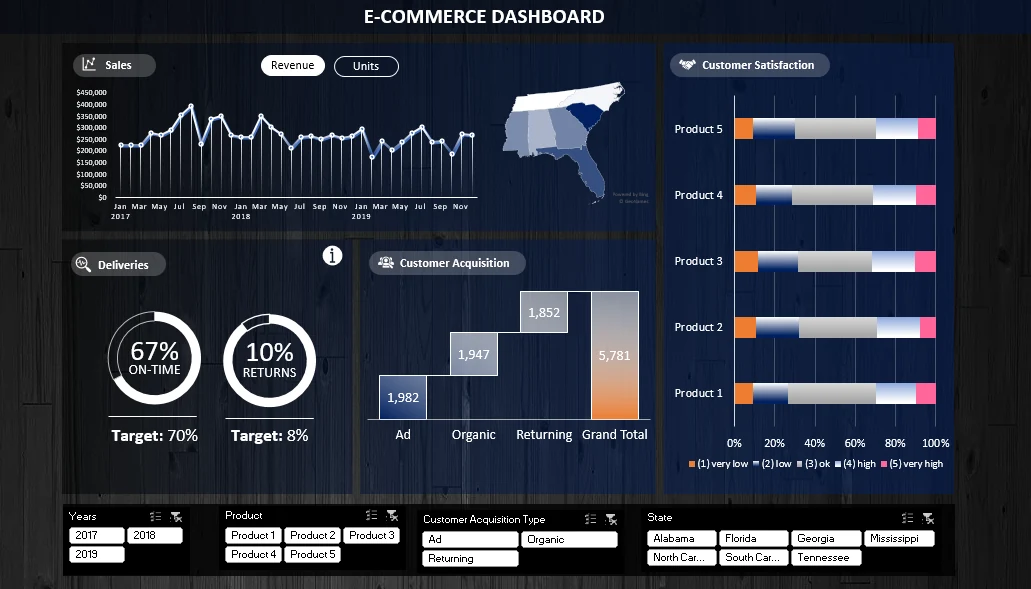
Commercial dashboard with revenue, deliveries, satisfaction and customer-acquisition views.
Explore related page →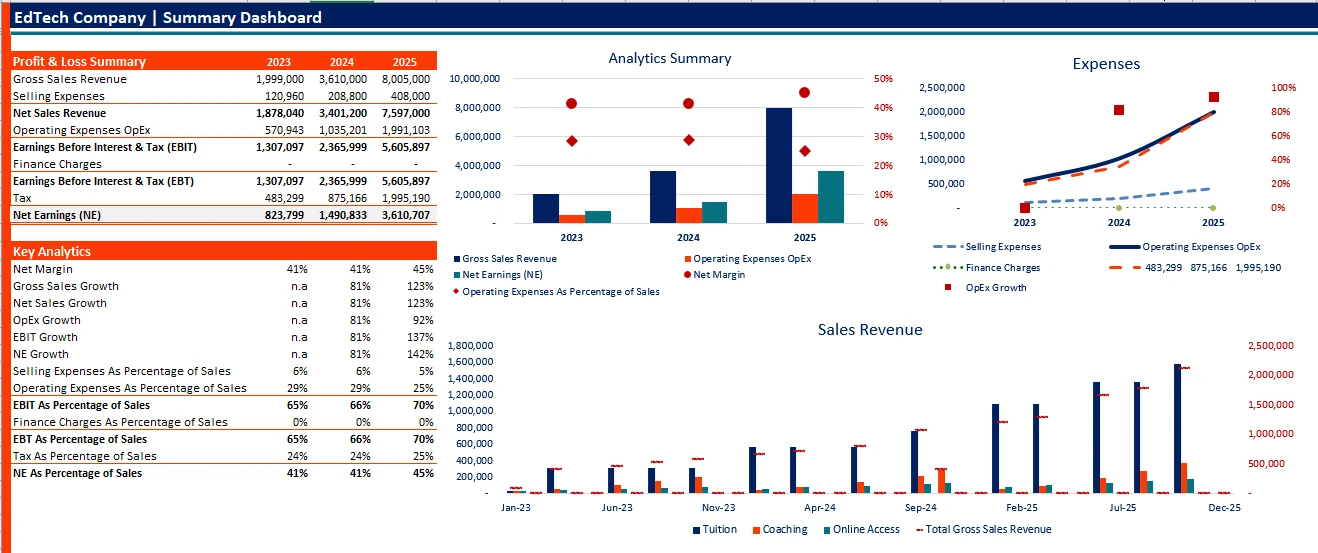
Revenue, margin, expense and sales trend analysis for an education business.
Explore related page →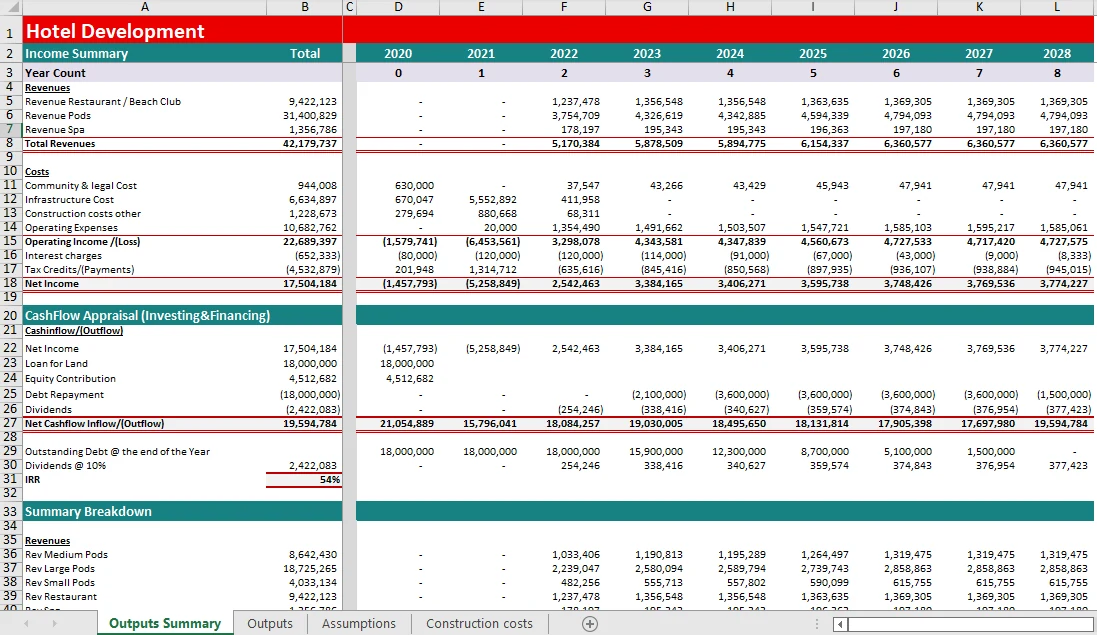
Project cash flow appraisal with debt, equity and dividend analysis.
Explore related page →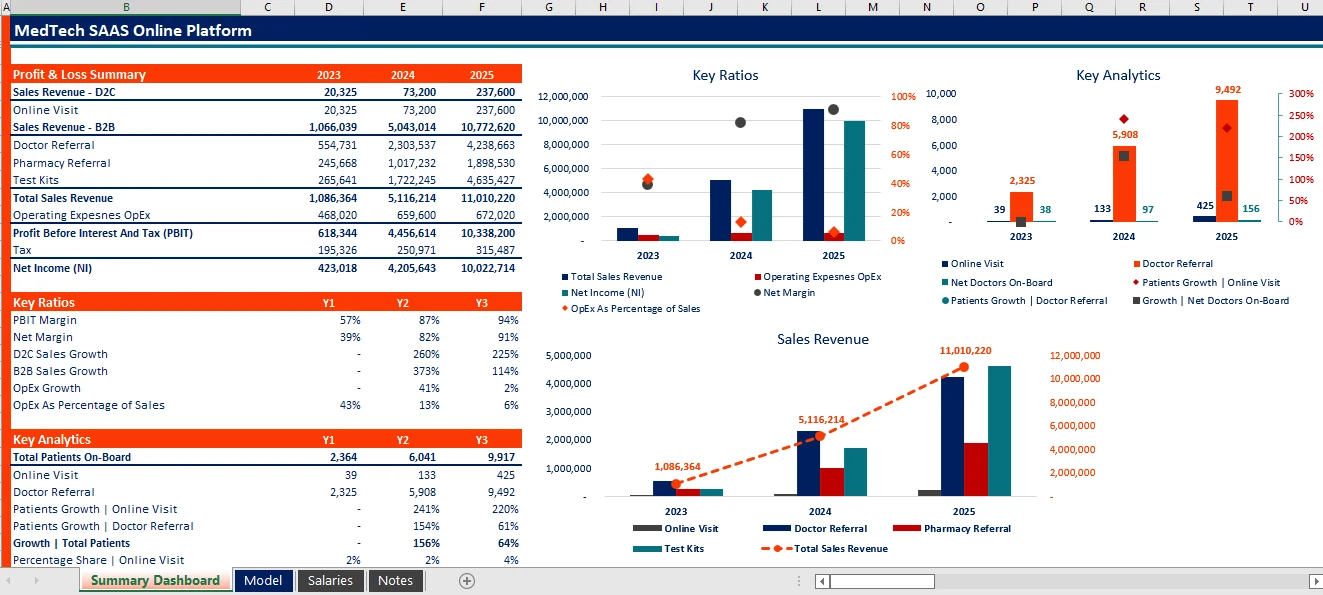
D2C, B2B and referral-driven revenue model with profitability and KPI dashboards.
Explore related page →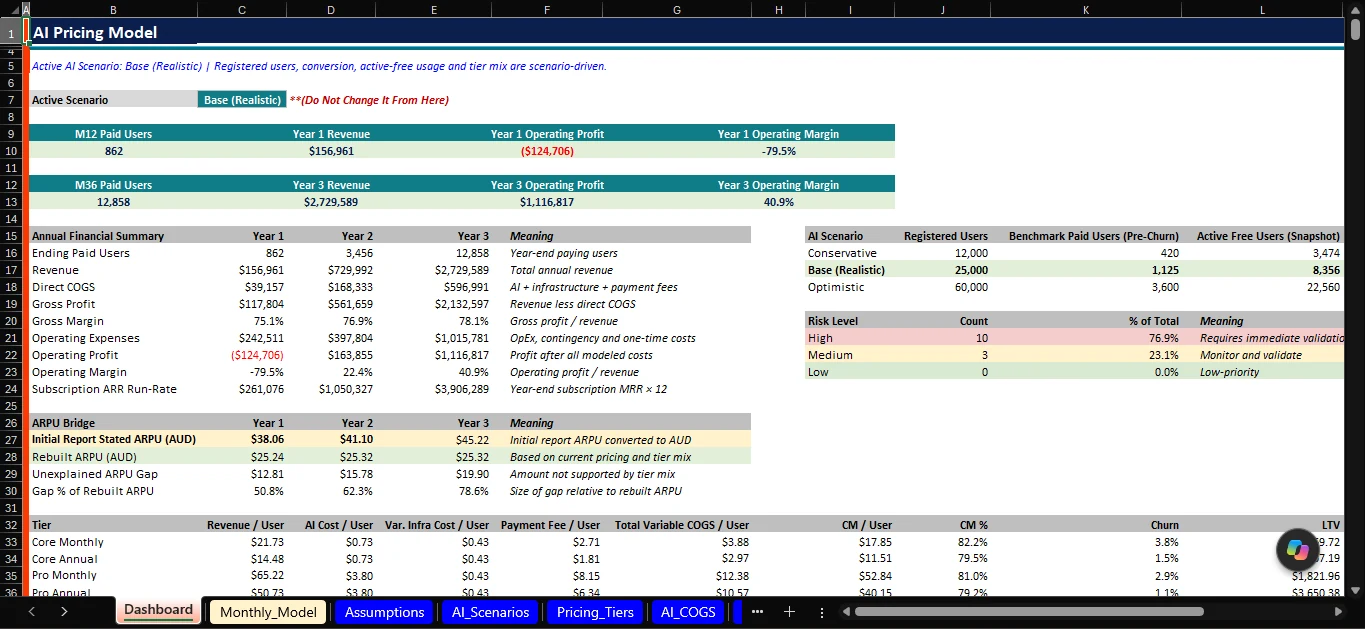
Scenario-based pricing and operating-margin dashboard for an AI product.
Explore related page →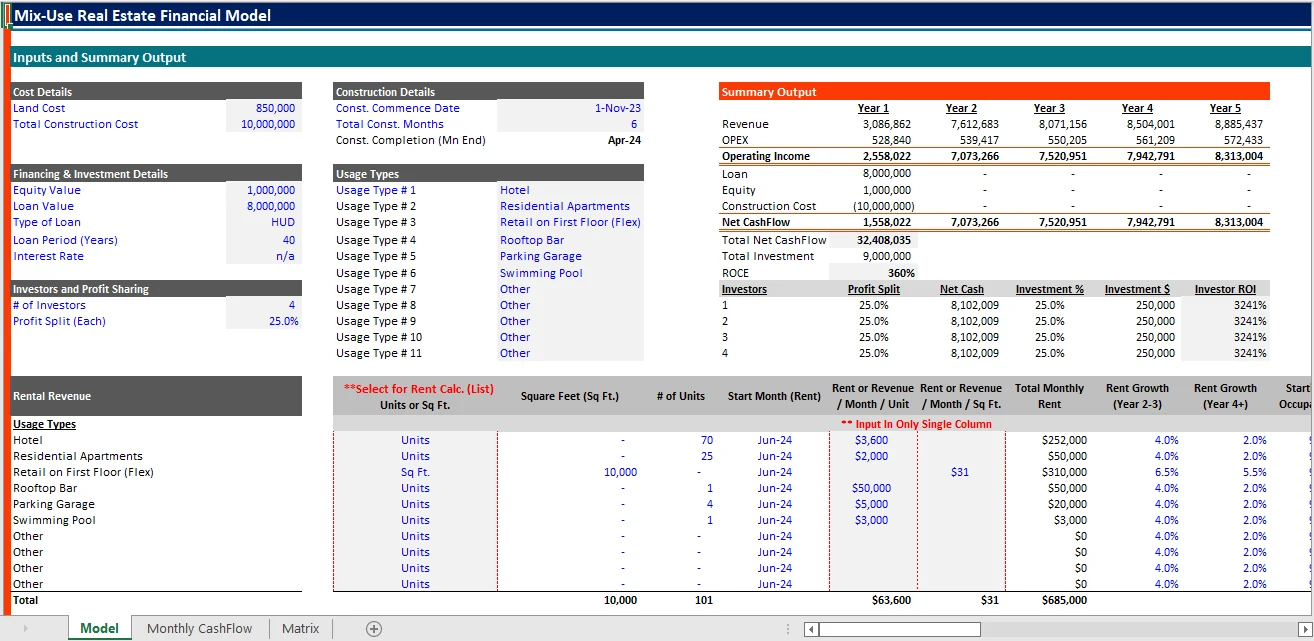
A multi-use model covering hotel, apartments, retail and shared investor economics.
Explore related page →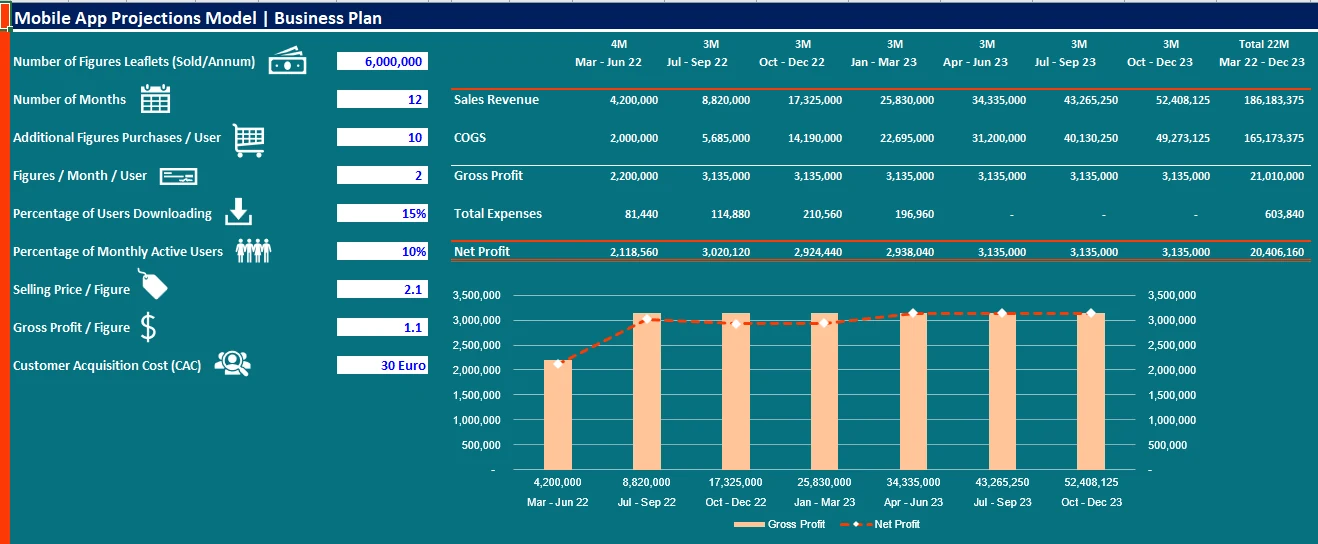
Business-plan projection model showing demand, COGS and profitability by period.
Explore related page →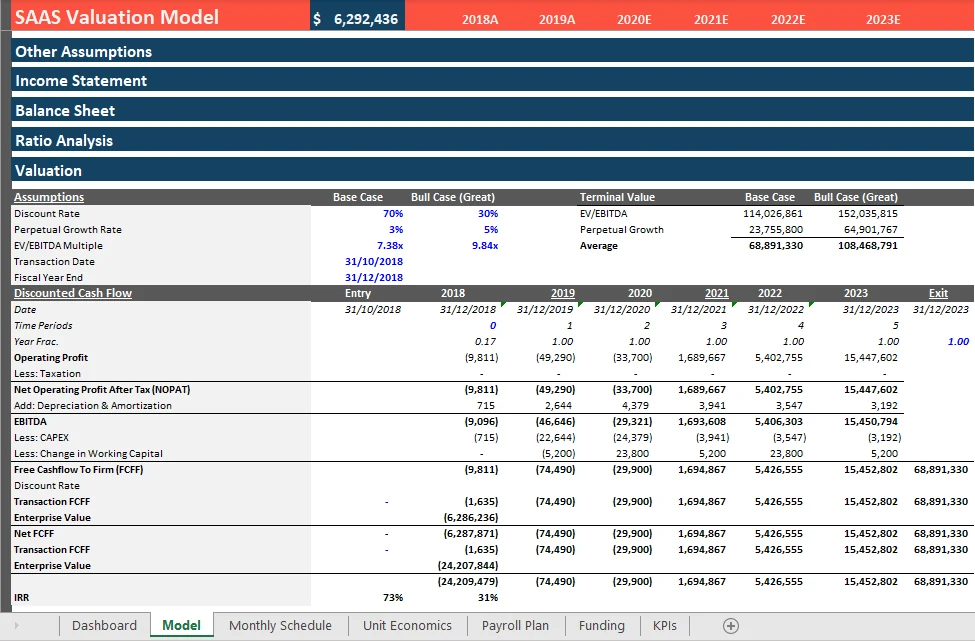
Operating projection linked directly to DCF assumptions, discounting and terminal value.
Explore related page →Selected examples omit screenshots with identifiable client names, addresses or individual account references. Numerical outputs are shown as workbook examples and should not be interpreted as verified performance results.
Assumptions, schedules, statements, KPI layers, dashboards and scenario controls.
Translate workbook logic into financing, pricing, budgeting and investment decisions.
Where needed, inspect an existing model using risk-based review procedures and concise reporting.
Whether you need a new model or a technical review, the engagement starts with a clear objective and defined deliverables.